 PAVE
PAVE
A balloon that chooses its own height.
PAVE, the Planetary Aerobot for Variable-altitude Exploration, is a Luleå University of Technology student experiment flying on ESA's BEXUS stratospheric balloon to prove the idea for Venus, Mars and the gas giants.
Countdown
Power comes from the external supply while the team checks the sensors, the storage and the pump. The helium envelope is filled before launch and the arm is restrained at 0°.
Up through the weather
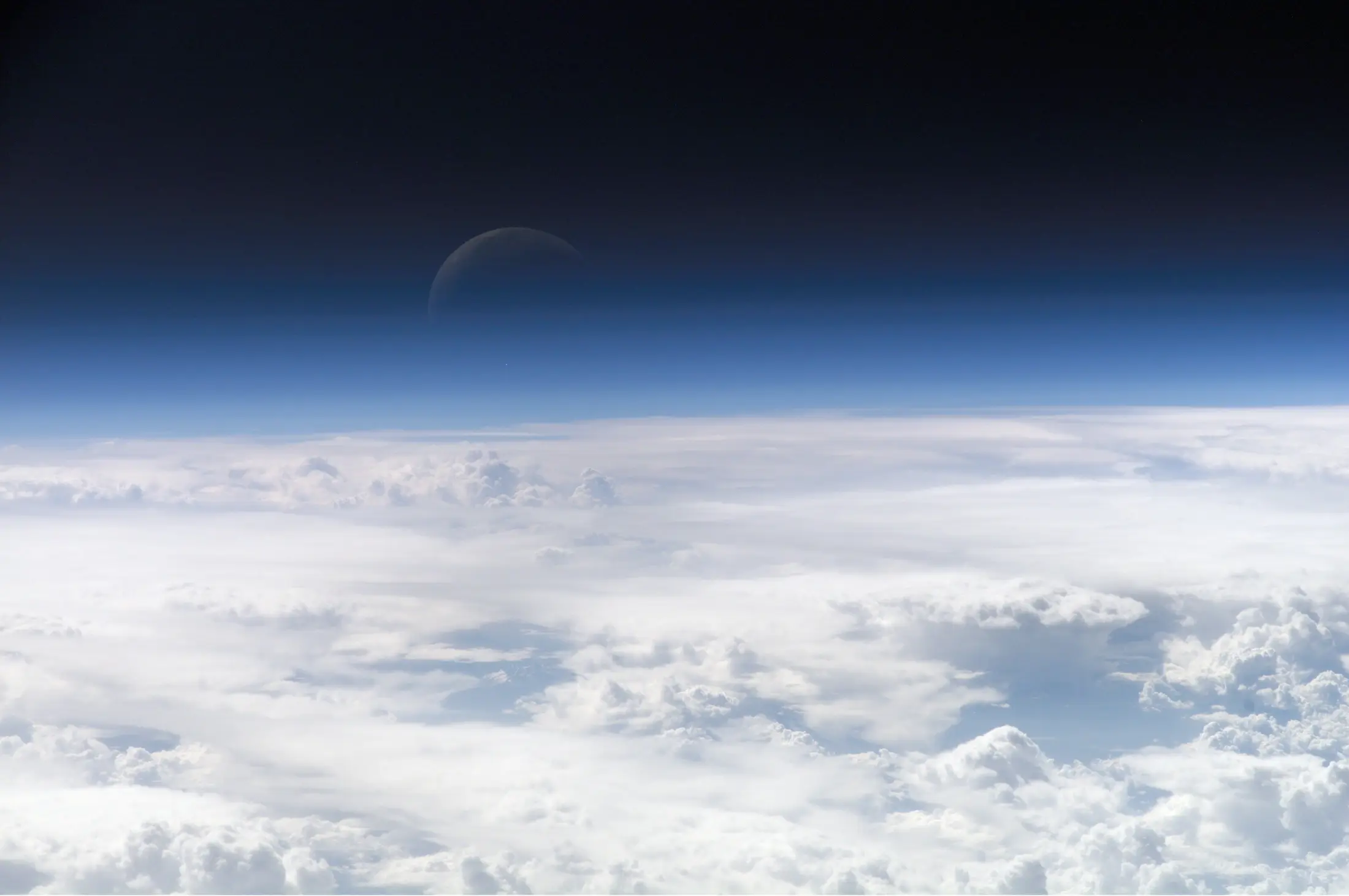
About ninety minutes through the troposphere and into the stratosphere. PAVE only observes: pressures, temperatures, arm angle and both IMUs are logged. The helium envelope swells as the air thins.
Float at 25–30 km
Ambient pressure is around 25 hPa. Once readiness is confirmed, the test sequence starts by telecommand. A pump-off baseline is recorded first.
The ballonet breathes
The pump inflates and deflates a 10–12 L ballonet inside the helium envelope. The buoyancy change swings the hinged arm through 0–90°, a rise of 15–20 cm relative to the gondola. No lift gas is vented.
Commands, delayed
Operator commands are delayed to mimic the light-travel time to other worlds, then compared against a zero-delay baseline. Can a person fly this by hand from far away?
Cut-down and recovery
On instruction from flight operations, tests stop and the arm is secured. Logging continues while power lasts. The experiment is recovered within one to two days.
Where landers fail and orbiters only look.
On Venus or a gas giant, a surface lander is unfeasible or short-lived, and an orbiter sees from far away. A buoyant aerobot that can change altitude stays aloft for long missions and samples different layers up close.
How it works
A helium envelope, an air ballonet, a hinged arm and a pump. Try the mechanism yourself.
Technology 02The flight plan
From countdown at T−3:30 to recovery, with every test planned against the clock.
Flight 03The team
Discover and understand the different roles within the project.
Team